
If you’ve ever felt unsure about working with Type 4 hair, you’re not alone
In fact this is one of the most common things we hear from stylists. Not a lack of interest, not a lack of care, just a lack of confidence usually because it’s something they were never properly taught. When something feels unfamiliar in the salon it’s natural to avoid it but here’s the shift…
Working with Afro and highly textured hair isn’t about being naturally “good at it” or having years of experience. It’s about understanding a few key principles and once you have those everything starts to feel more manageable, more predictable, and far less intimidating.
Why It Feels So Difficult and It’s Not Your Fault
Most traditional hair education has focused heavily on straight to wavy hair types. Which means many stylists have built their entire foundation without fully understanding how coily and kinky hair behaves, responds to products or holds shape. So when you’re faced with something different it can feel like you’re starting from scratch but you’re not.
You already have the core skills of cutting, sectioning, styling and consultation. What’s missing is simply the context and application for textured hair and once that clicks everything changes.

The 4 Core Principles of Working With Type 4 Hair
1. Moisture Is Everything
Type 4 hair thrives on moisture. Unlike straighter hair types natural oils don’t travel as easily down the hair shaft which means dryness can happen quickly if the hair isn’t properly hydrated.
This is why product choice matters. Hydration-first, rather than just styling is key to achieving healthy defined results.
2. Tension Needs to Be Intentional
With Afro and coily textures, tension isn’t about control, it’s about care. Too much tension can cause breakage or discomfort while too little can affect the final result.
Learning how to work with the natural pattern of the hair rather than against it creates better outcomes and a far more comfortable experience for your client.
3. Product Layering Makes the Difference
One of the biggest shifts for stylists is understanding that Type 4 hair often requires layering products rather than using just one.
Think:
Hydration → Seal → Define
Each product has a purpose and when used correctly they work together to enhance the natural texture rather than fight it.
4. Consultation Is Deeper (But Simpler Than You Think)
Consultation with Afro hair clients is never about assumptions, it’s about gaining understanding. Every client’s hair journey is different, from previous treatments to daily routines and personal preferences. Taking the time to ask the right questions outlined in our Gaudi framework builds trust quickly and ensures you’re delivering a result that actually works for their lifestyle.
What Most Stylists Get Wrong
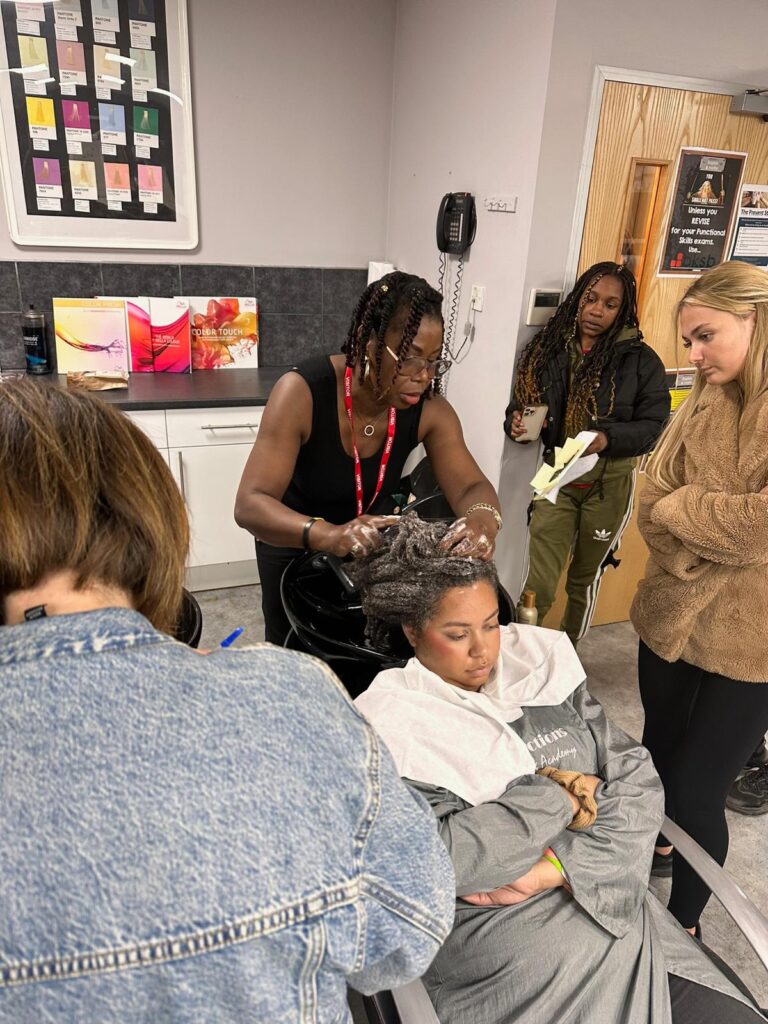
The biggest mistake isn’t technique, it’s waiting. Waiting until you feel “ready”, waiting until you’ve seen it more, waiting until confidence magically appears. But confidence doesn’t come first. It comes from learning, doing and being guided through the process properly.
When stylists begin to understand textured hair something shifts. Consultations feel easier, product choices feel clearer, styling feels more intuitive. Most importantly the hesitation disappears.
Instead of avoiding these services you start to feel excited about offering them because you know you can deliver results your clients will love.
You Don’t Have to Figure This Out Alone
This is exactly why structured education matters.
Not just watching clips online or guessing your way through, but having a clear, step-by-step understanding of how Afro and textured hair works, and how to apply that confidently in a salon setting.
Because when you’re supported properly, you don’t just learn faster, you build real confidence that lasts.
Whether you are a freelance stylist, salon owner or training provider… if you’re ready to stop second-guessing and start feeling confident working with Type 4 hair, the next step is learning with the right guidance.
The Circle of Confidence Afro Course is designed to give you exactly that:
- Practical skills
- Clear frameworks
- The support you need to bring this into your salon with confidence
Start here with our online consultation form, one of our team will be in touch.
